



In today’s competitive manufacturing environment, productivity is the key to profitability and growth. However, many factories still rely on manual processes, outdated systems, and inconsistent workflows. This is where industrial automation becomes a game-changer. By integrating smart technologies, factories can significantly improve efficiency, reduce errors, and boost overall output.In fact, studies and How Industrial Automation Can Increase Factory Productivity by 40%
🚀 What is Industrial Automation?
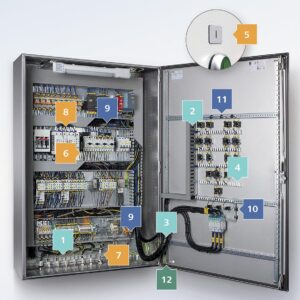
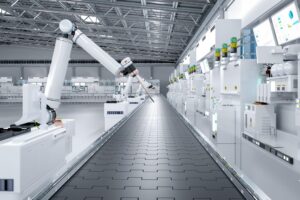
Industrial automation refers to the use of control systems, machines, and software to perform manufacturing tasks with minimal human intervention.
These systems include:
- PLC (Programmable Logic Controllers)
- Robotics
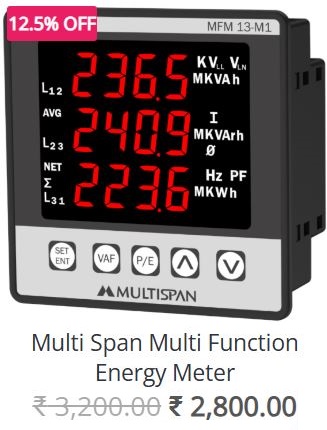
- Sensors and IoT devices
- SCADA systems
- AI-powered analytics
In other words, automation replaces repetitive manual work with intelligent systems.
🔄 Why Traditional Manufacturing Limits Productivity
Even today, many factories face challenges such as:
- Manual errors
- Slow production speed
- Machine downtime
- Lack of real-time data
As a result, productivity remains limited, and operational costs increase.
⚙️ How Industrial Automation Boosts Productivity by 40%
1. Faster Production Cycles
To begin with, automated machines work faster than humans and operate continuously.
Therefore:
- Production speed increases
- Output improves significantly
2. Reduced Human Errors
Moreover, automation minimizes mistakes in repetitive tasks.
As a result:
- Better product quality
- Less rework and wastage
3. 24/7 Operations
Unlike manual labor, machines can run round the clock.
Consequently:
- Increased production hours
- Higher overall output
4. Real-Time Monitoring & Control
Automation systems provide live data on:
- Machine performance
- Production status
- Bottlenecks
Thus, managers can make quick and informed decisions.
5. Predictive Maintenance
In addition, sensors and data analytics help predict machine failures before they occur.
Therefore:
- Reduced downtime
- Lower maintenance costs
6. Improved Resource Utilization
Automation ensures optimal use of:
- Raw materials
- Energy
- Workforce
As a result, operational efficiency improves significantly.
7. Consistent Quality Output
Finally, automated systems follow predefined standards.
In fact:
- Quality remains consistent
- Customer satisfaction increases
📊 Real Impact of Automation in Factories
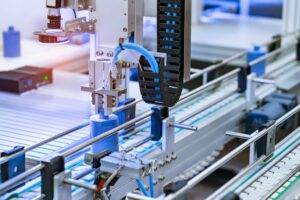
Factories implementing automation often experience:
- ✅ Up to 40% increase in productivity
- ✅ Reduction in operational costs
- ✅ Improved product quality
- ✅ Faster delivery timelines
- ✅ Better workplace safety
🏭 Use Cases of Industrial Automation
🔧 Assembly Lines
Robotic systems speed up production and reduce errors.
📦 Packaging
Automated packaging increases speed and consistency.
⚙️ Machine Operations
CNC and automated machines improve precision.
📊 Monitoring Systems
SCADA dashboards provide real-time insights.
⚠️ Challenges in Automation Implementation
While automation offers huge benefits, challenges include:
- ❌ High initial investment
- ❌ Skilled workforce requirement
- ❌ Integration with existing systems
However, the long-term benefits outweigh the initial costs.
🔮 Future of Industrial Automation
Looking ahead, automation will evolve with:
- Artificial Intelligence
- Smart factories (Industry 4.0)
- Fully autonomous production lines
Therefore, companies that adopt automation early will gain a strong competitive advantage.
💡 Final Thoughts
In conclusion, industrial automation is no longer a luxury—it is a necessity for modern manufacturing. By improving speed, accuracy, and efficiency, automation can boost factory productivity by up to 40%.
Ultimately, businesses that embrace automation will achieve higher growth, better quality, and long-term success.