





In today’s competitive manufacturing environment, reducing waste is one of the fastest ways to improve productivity and profitability. However, many factories continue to lose time, money, and resources due to hidden inefficiencies. This is where lean manufacturing principles help identify and eliminate waste. By focusing on waste reduction, companies can streamline operations and significantly boost efficiency. Here is how 10 Common Wastes in Manufacturing and How to Eliminate Them.
🚀 What is Waste in Manufacturing?
In lean manufacturing, waste (also known as Muda) refers to any activity that does not add value to the final product.
In other words, if a process does not directly contribute to customer value, it is considered waste.
⚙️ 10 Common Wastes in Manufacturing
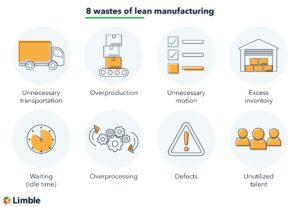
1. Overproduction
Producing more than required or before it is needed.
Problem: Excess inventory, storage costs
Solution: Implement demand-based production (Just-in-Time)
2. Waiting
Idle time when workers or machines are waiting.
Problem: Delays in production
Solution: Balance workflows and reduce bottlenecks
3. Transportation
Unnecessary movement of materials.
Problem: Increased handling cost and time
Solution: Optimize plant layout
4. Overprocessing
Doing more work than required.
Problem: Wasted time and energy
Solution: Standardize processes and avoid unnecessary steps
5. Inventory
Excess raw materials or finished goods.
Problem: High holding costs and risk of damage
Solution: Use inventory control systems
6. Motion
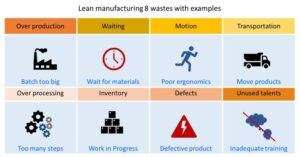
Unnecessary movement of workers.
Problem: Fatigue and inefficiency
Solution: Improve workplace organization (5S)
7. Defects
Errors that require rework or scrap.
Problem: Increased costs and delays
Solution: Implement quality control systems
8. Underutilized Talent
Not using employee skills effectively.
Problem: Loss of innovation and productivity
Solution: Train and involve employees in improvement
9. Downtime
Machine breakdowns or stoppages.
Problem: Production loss
Solution: Predictive maintenance and monitoring
10. Excess Energy Consumption
Unnecessary use of power and resources.
Problem: Increased operational costs
Solution: Optimize energy usage and upgrade systems
🔄 How Eliminating Waste Improves Productivity
By removing these wastes:
- ✅ Production becomes faster
- ✅ Costs are reduced
- ✅ Quality improves
- ✅ Employee efficiency increases
As a result, factories become more competitive and profitable.
🏭 Practical Steps to Eliminate Waste
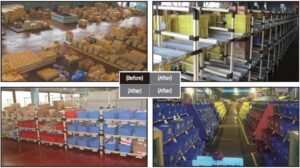
1. Implement 5S Methodology
Organize the workplace to reduce motion and inefficiency.
2. Adopt Lean Manufacturing
Focus on continuous improvement (Kaizen).
3. Use Data & Monitoring Tools
Track performance and identify issues quickly.
4. Train Employees
Build a culture of efficiency and accountability.
⚠️ Common Challenges
- Resistance to change
- Lack of awareness
- Poor implementation
However, with proper planning and leadership, these challenges can be overcome.
🔮 Future of Waste Reduction
With Industry 4.0 technologies:
- AI can predict inefficiencies
- IoT can track performance in real time
- Automation can eliminate repetitive waste
Therefore, the future of manufacturing is lean, smart, and highly efficient.
💡 Final Thoughts
In conclusion, identifying and eliminating the 10 common wastes in manufacturing is essential for improving productivity and reducing costs. By applying lean principles and modern tools, factories can achieve operational excellence.
Ultimately, waste reduction is not a one-time activity—it is a continuous journey toward improvement.


