




In today’s competitive industrial landscape, small and medium enterprises (SMEs) often feel overshadowed by large manufacturing companies with bigger budgets, advanced infrastructure, and global reach. However, size is no longer the ultimate advantage. In fact, SMEs today have unique strengths AND how SMEs can compete in manufacturing industry and even outperform larger players. With the right strategies, technology, and mindset, SMEs can become agile, innovative, and highly efficient.

🚀 The Changing Manufacturing Landscape
Traditionally, large companies dominated due to:
- Higher capital investment
- Mass production capabilities
- Strong supply chains
However, the rise of digital technologies and lean practices has leveled the playing field.
As a result, SMEs now have access to tools and strategies that were once limited to large enterprises.
⚙️ Key Strategies for how SMEs can compete in manufacturing industry Effectively
1. Focus on Agility & Flexibility
To begin with, SMEs can adapt faster than large organizations.
Therefore, they can:
- Respond quickly to market changes
- Customize products easily
- Experiment with new ideas
👉 Unlike large companies, SMEs don’t have complex approval processes.

2. Adopt Smart Technologies (Industry 4.0)
Moreover, SMEs can leverage affordable digital solutions such as:
- IoT-enabled machines
- Cloud-based systems
- Automation tools
As a result, they can improve efficiency without massive investment.
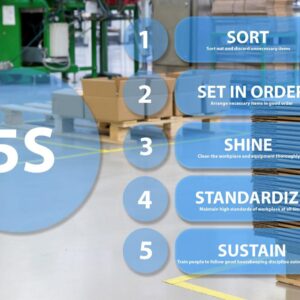
3. Implement Lean Manufacturing (5S & Kaizen)
In addition, adopting lean practices helps SMEs:
- Reduce waste
- Improve productivity
- Optimize processes
For example, tools like 5S can significantly enhance workplace organization and efficiency.
4. Niche Specialization
Instead of competing on volume, SMEs should focus on specialized markets.
Therefore, they can:
- Offer customized solutions
- Serve specific industries
- Build expertise
👉 This reduces direct competition with large manufacturers.
5. Build Strong Customer Relationships
Unlike large corporations, SMEs can provide:
- Personalized service
- Faster response times
- Direct communication
Consequently, customer loyalty becomes a strong competitive advantage.
6. Use Data for Decision Making
Furthermore, SMEs should leverage data to:
- Track performance
- Identify bottlenecks
- Improve operations
As a result, decisions become more accurate and impactful.
7. Optimize Cost Efficiency
Cost control is critical for SMEs.
Therefore, focus on:
- Reducing waste
- Improving resource utilization
- Minimizing downtime
👉 Small improvements can lead to significant savings.
8. Invest in Skilled Workforce
Employees are a key strength for SMEs.
In fact, investing in training leads to:
- Higher productivity
- Better quality output
- Innovation
🏭 Real Advantages SMEs Have Over Large Companies

Interestingly, SMEs already possess several strengths:
- ✅ Faster decision-making
- ✅ Lower operational complexity
- ✅ Greater innovation potential
- ✅ Closer customer relationships
- ✅ Flexibility in operations
Thus, SMEs can move faster and adapt better than large organizations.
⚠️ Challenges SMEs Must Overcome
Despite advantages, SMEs face challenges:
- ❌ Limited capital
- ❌ Resource constraints
- ❌ Limited technology adoption
- ❌ Market competition
However, with the right strategy, these challenges can be turned into opportunities.
🔮 Future Outlook for SMEs in Manufacturing
Looking ahead, SMEs that embrace:
- Digital transformation
- Lean practices
- Smart decision-making
will thrive in the evolving manufacturing ecosystem.
In fact, the future belongs to companies that are fast, flexible, and data-driven—not just big.
💡 Final Thoughts
In conclusion, SMEs can absolutely compete with large manufacturing companies by leveraging their agility, adopting modern technologies, and focusing on efficiency and customer value.
Ultimately, success is not determined by size, but by strategy, execution, and adaptability.