




In today’s competitive,5S implementation in manufacturing environment, efficiency, organization, and discipline are critical for success. However, many factories struggle with cluttered workspaces, wasted time, and inconsistent processes.
This is where 5S implementation in manufacturing plays a powerful role. It is a simple yet highly effective lean manufacturing tool that transforms workplaces into organized, efficient, and productive environments.
🚀 What is 5S?
5S is a workplace organization methodology originating from Japan, widely used in lean manufacturing.
The 5S stands for:
- Sort (Seiri) – Remove unnecessary items
- Set in Order (Seiton) – Arrange needed items systematically
- Shine (Seiso) – Clean the workplace regularly
- Standardize (Seiketsu) – Create consistent procedures
- Sustain (Shitsuke) – Maintain discipline and habits
In other words, 5S ensures that everything in the workplace has a purpose, a place, and a process.
🔄 Why Factories Struggle Without 5S
Even today, many factories operate without proper organization. As a result:
- Tools are misplaced
- Time is wasted searching for items
- Workspaces become unsafe
- Productivity drops
Consequently, these small inefficiencies lead to major losses over time.

⚙️ How 5S Improves Factory Productivity
1. Eliminates Waste
To begin with, 5S helps remove unnecessary items from the workspace.
Therefore:
- Less clutter
- More working space
- Faster operations
2. Reduces Time Wastage
When tools and materials are properly arranged, workers no longer waste time searching.
As a result:
- Faster task completion
- Improved workflow
- Increased output
3. Improves Workplace Safety
A clean and organized workplace reduces risks.
For example:
- No scattered tools
- Clear pathways
- Fewer accidents
Thus, employee safety improves significantly.
4. Enhances Employee Productivity
Moreover, a well-organized environment allows employees to focus better on their work.
In fact:
- Less stress
- Better concentration
- Higher efficiency
-
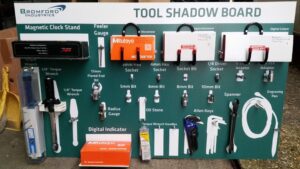
How 5S Implementation Improves Factory Productivity
5. Creates Standardized Processes
5S introduces clear systems and procedures.
Therefore:
- Work becomes consistent
- Errors are reduced
- Training becomes easier
6. Builds Discipline & Ownership
Finally, sustaining 5S creates a culture of responsibility.
As a result:
- Employees take ownership
- Teams follow best practices
- Continuous improvement becomes a habit
🏭 Real-Life Impact of 5S in Factories
Factories that implement 5S often see:
- ✅ 20–30% increase in productivity
- ✅ Reduction in downtime
- ✅ Improved quality
- ✅ Better space utilization
- ✅ Higher employee morale
📊 5S Before vs After (Simple Example)
| Without 5S | With 5S |
|---|---|
| Cluttered workspace | Clean and organized |
| Time wasted searching | Everything easy to find |
| Frequent delays | Smooth workflow |
| Unsafe environment | Safer workplace |
⚠️ Challenges in 5S Implementation
While 5S is simple, implementation can be challenging.
Common issues include:
- Lack of employee involvement
- Resistance to change
- Poor follow-up
- Inconsistent discipline
However, with proper training and leadership support, these challenges can be overcome.
🔮 Future of 5S in Smart Manufacturing
As industries move toward Industry 4.0, 5S remains highly relevant.
In fact, it becomes even more powerful when combined with:
- Digital tracking systems
- Smart dashboards
- Real-time monitoring tools
Therefore, 5S acts as a strong foundation for digital transformation.
💡 Final Thoughts
In conclusion, 5S is not just about cleanliness—it is about creating a highly efficient and productive work environment. By eliminating waste, improving organization, and building discipline, factories can achieve significant productivity gains.
Ultimately, companies that adopt 5S successfully are better positioned to compete, grow, and sustain long-term success.